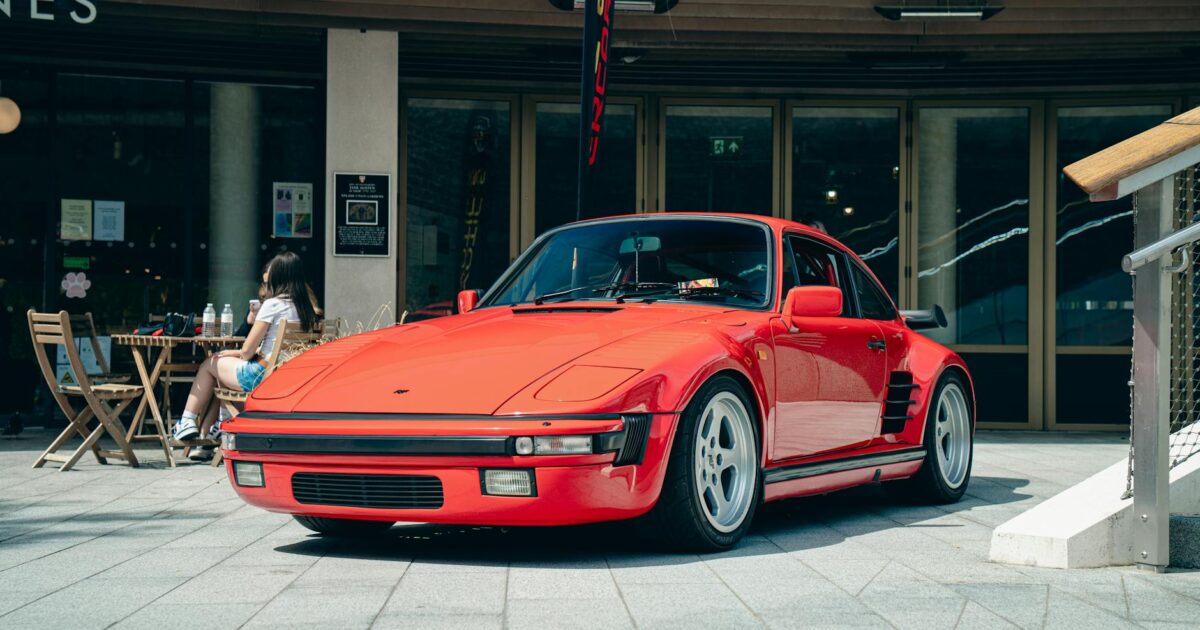
The 2025 Taycan Turbo S cranks out 750 horsepower, rockets from 0-60 in 2.3 seconds, and stickers at $186,400. That’s $23,600 less than the gas-powered 911 Turbo S, yet it packs 110 more horses. Porsche’s electric sedan now out-muscles every 911 ever built, and you might be eyeing one right now.
We may earn a commission when you click on links in this article. Learn more.
But dropping nearly two hundred grand on a four-door EV—even one that can embarrass a Ferrari from a stoplight—isn’t just a car decision. It’s a six-figure financial move that will echo through your budget for years.
You’re not just buying speed. You’re buying a front-row ticket to the electric revolution, wrapped in Porsche’s leather-and-suede cabin. The question isn’t whether the Taycan Turbo S is incredible—it is. The question is whether shelling out for Porsche’s most powerful car ever makes a lick of sense for your money. Let’s walk through that evaluation, cold and clear.
1. Situation Assessment
Porsche’s new king is electric, and that changes everything. The Taycan Turbo S uses a 97-kWh battery and dual motors to deliver 774 lb-ft of instant torque—enough to pin your chest to the seat before your brain processes the launch. For context, a 2024 911 Turbo S makes only 590 lb-ft. The EV era has officially leapfrogged the turbocharged flat-six legend.
Why does this matter for your wallet? Because the car market hasn’t caught up. Luxury EVs depreciate brutally. A 2021 Taycan Turbo S that cost $185,000 new now trades around $95,000–$105,000 after three years—a 45% drop. The 911 Turbo S? It might lose only 15–20% in the same period. Tesla has conditioned buyers to expect software-adjacent features that date quickly, and Porsche’s first-gen Taycan already saw a significant mid-cycle refresh.
Your purchase decision lands in this gap between staggering performance and uncertain long-term value. If you’re financing, a 60-month loan at 7% APR on $186,400 means a $3,700 monthly payment before taxes, insurance, or a charger installation. Leasing might soften the blow, but even that can top $2,500 a month.
You’ve got choices. And depending on your age, income, and financial priorities, one of them is going to feel a lot smarter than the others.
2. Your Options
Option A: Buy the Taycan Turbo S New—Pride of Ownership, Pain of Depreciation
You walk into a Porsche dealer, spec your ideal paint-to-sample color, and drive off owning the fastest production Porsche ever. The window sticker reads $186,400 before options (and you’ll add $15k–$30k in goodies easily). A 20% down payment of $37,280 leaves a $149,120 loan. At 7.49% for 60 months, you’re staring at a $2,988 payment per month, plus sales tax (which could be $15,000+), registration, and sky-high insurance.
Pros:
- It’s yours. No mileage limits, no lease-end inspections.
- You get the full EV experience: near-silent thrust, 800-volt charging that adds 60 miles in 5 minutes on a 350kW charger, and over-the-air updates.
- You can keep it for a decade if the battery holds up (Porsche warranties the pack for 8 years/100,000 miles).
Cons:
- The depreciation cliff. Three-year resale value might be 55% of MSRP, meaning you lose around $84,000 in value.
- No federal tax credit for purchase because the Taycan’s MSRP blows past the $55k sedan cap. You get zero help from Uncle Sam.
- Running costs aren’t trivial: insurance can be $350–$500 per month, a NEMA 14-50 outlet install runs $500–$1,500, and a full home charger adds $1,000+.
- If you don’t have a garage with charging, the ownership experience frays at the edges quickly.
If you’re a 45-year-old business owner with a paid-off house, a flush emergency fund, and a car collection, buying outright might be fine. For most humans, tying up that much capital in a depreciating EV is a tough pill.
Option B: Lease the Taycan Turbo S—Sidestep Depreciation, Capture the $7,500 Loophole
Here’s where the EV game gets interesting. While a purchase disqualifies you from the federal clean vehicle credit, leasing doesn’t. Porsche Financial Services can claim the $7,500 commercial credit and pass it through as a capital cost reduction on your lease. That’s real money.
A 2025 Taycan Turbo S lease might look like this: 36 months, 10,000 miles per year, $0 down (you always want $0 down on a lease to avoid losing it if the car is totaled). The money factor (interest rate) might be around .0035 (equivalent to 8.4% APR), and the residual value could be set at 52% after three years. With the $7,500 incentive applied, your monthly could land around $2,700–$3,200 including tax, depending on options.
Pros:
- No depreciation risk. The residual is guaranteed—if the car’s market value tanks to 40%, you hand back the keys.
- You lock in the $7,500 benefit that a buyer misses.
- In 36 months, you can jump into a new Taycan with updated battery tech (solid-state batteries might be on the horizon) or switch back to a 911.
- Monthly payment is often lower than financing, freeing up cash flow.
Cons:
- You’ll pay a total of $97,200–$115,200 over three years and own nothing at the end. That’s like renting a very fast apartment.
- Mileage overages sting: 25 cents per mile. Drive 15k a year and owe $3,750 at turn-in.
- Porsche lease-end fees for excess wear and tear can be brutal—curbed wheels, rock chips, a torn seat bolster? Prepare for a bill.
- You’re still on the hook for insurance, charging, and property tax in some states.
If you’re a 37-year-old tech VP earning $350k, maxing your 401(k), and you crave the latest EV tech without long-term baggage, leasing the Taycan Turbo S makes a compelling case. It’s a relatively predictable expense rather than a gamble on resale.
Option C: Skip It—Buy a 911 or Invest the Cash
Not buying the Taycan Turbo S is a perfectly aggressive financial move. Instead, you could:
- Buy a used 2022 911 Turbo S for ~$210,000. It won’t depreciate nearly as fast. In five years, it might still be worth $160k–$170k. You’ll burn gas, but you’ll get that iconic flat-six wail and a bulletproof resale history. Insurance will be slightly cheaper ($250–$350/month). If you’re a Porsche purist who keeps cars forever, this path is less destructive to your net worth.
- Put the $37,000 down payment into an S&P 500 index fund. Add $3,000 a month instead of a car payment. Over five years at a 7% annual return, that’s about $266,000—a six-figure head start on a second home, a kid’s college, or early retirement.
- Lease a Taycan 4S or GTS for half the price, still get 90% of the thrill, and keep $1,500/month in your pocket.
No option is universally right. But I’ll tell you this: If you’re not already maxing out your retirement contributions, have credit card debt above 10% APR, or don’t have six months of expenses in cash, you can’t afford any version of this car. Period.
3. Decision Framework
Here’s where the rubber meets the road. Pick the scenario that fits you.
If you’re a 32-year-old W-2 employee making $130,000 with a mortgage, student loans, and a 401(k) balance under $100,000, you have no business even test-driving the Taycan Turbo S. The monthly nut—payment, insurance, and charging—could consume 40% of your take-home pay. Choose Option C. Invest the difference. Your future self will thank you when you’re financially independent at 55.
If you’re a 40-year-old physician with a $400k income, $1.5 million in retirement accounts, and a paid-off house, and you’re dying to ditch gas stations forever, lease a Taycan Turbo S (Option B). The $2,900/month payment represents less than 9% of your gross income. You get the $7,500 loophole, sidestep depreciation, and keep capital free for your practice or other investments. Just don’t put money down—invest that cash instead.
If you’re a 50-year-old car collector who plans to keep the vehicle for 10+ years and hates the idea of “renting” a Porsche, skip the Taycan and buy a certified pre-owned 911 Turbo S (Option C). Its depreciation curve is kind, the driving experience is visceral, and you’ll probably sell it for near what you paid a decade later. Yes, it’s slower off the line. No, you won’t care when you’
Marcus Chen
Former financial analyst turned writer. Spent 8 years at a Big Four firm before deciding that explaining money to real people was more fun than explaining it to regulators.
This content is for informational purposes only and does not constitute financial advice. Always consult a qualified financial advisor before making investment decisions.
Leave a Comment